
Search
Search results for "&lsquo"
We found 9 results
-
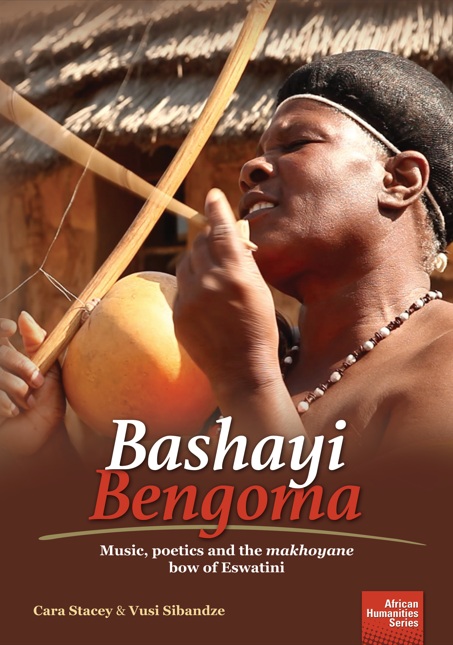
'Bashayi Bengoma': Music, poetics and the 'makhoyane' bow of Eswatini
Item type: Books • Author: Cara Stacey & Vusi SibandzeRecent years have seen a revival of interest in musical bows in Brazil, around the Indian Ocean, and across the African continent. “Bashayi Bengoma - Music, poetics and the makhoyane bow of Eswatini” is the latest contribution to an emerging field of scholarship on musical bows and overtone instruments from southern Africa and beyond. It addresses the lack of literature on the makhoyane bow of Eswatini and a dearth of scholarly research on music from this small southern African country. -

‘I Beg to Tell’: Everyday agency in colonial Lagos, 1940–1960
Item type: Books • Author: Tunde Decker‘I beg to tell’ – Everyday agency in colonial Lagos, 1940–1960 foregrounds everyday life as a major component of colonial Lagos history. It is an interdisciplinary study of a segment of neglected historical actors in colonial Nigeria with significant implications for Nigerian and African historiography. It draws insights from anthropology, sociology, social psychology and textual studies, and aims at enriching the research of academics as well as undergraduate and postgraduate students working on different aspects of African Studies. -

The Anglophone Literary-Linguistic Continuum: English and Indigenous Languages in African Literary Discourse
Item type: Books • Author: Michael AndindilileMichael Andindilile interrogates Obi Wali’s (1963) prophecy that continued use of former colonial languages in the production of African literature could only lead to ‘sterility’, as African literatures can only be written in indigenous African languages. -

Boxing is no Cakewalk! Azumah ‘Ring Professor’ Nelson in the Social History of Ghanaian Boxing
Item type: Books • Author: De-Valera NYM BotchwayBoxing is no cakewalk! Azumah ‘Ring Professor’ Nelson in the Social History of Ghanaian Boxing explores the social history of boxing in Ghana and its interesting nexus with the biography of Azumah Nelson, unquestionably Ghana’s most celebrated boxer. The book posits that sports constitute more than mere games that people play. They are endowed with enormous political, cultural, economic and social power that can influence people’s lives in various ways. -

Hollywood and Africa: Recycling the ‘Dark Continent’ Myth, 1908–2020
Item type: Books • Author: Okaka Opio DokotumHollywood and Africa - recycling the ‘Dark Continent’ myth from 1908–2020 is a study of over a century of stereotypical Hollywood film productions about Africa. It argues that the myth of the Dark Continent continues to influence Western cultural productions about Africa as a cognitive-based system of knowledge, especially in history, literature and film. -

Yabbing and Wording: The artistry of Nigerian stand-up comedy
Item type: Books • Author: Izuu NwankwọYabbing and Wording: The artistry of Nigerian stand-up comedy is a long-overdue academic interrogation of the novel stand-up practice in Nigeria as performance. ‘Yabbing’ comes from the Nigerian Pidgin English verb, ‘yab’, which means a satirical jibe thrown at individuals, groups or institutions. Nigeria’s Fela Anikulapo-Kuti used this effectively in his recorded and live music performances against successive military regimes. ‘Wording’ derives from the English term ‘word’ and refers to a game in which parties exchange insults. It is a modern-day coinage for traditional forms of joking that existed across Nigeria and elsewhere in precolonial times. -

The Selfless Constitution: Experimentalism and Flourishing as Foundations of South Africa’s Basic Law
Item type: Books • Author: Stu WoolmanDo you possess ‘freedom’—the will to do as you choose—as an individual, as a participant in social affairs or as a citizen in the political realm? Well, no. Not really. At least not as most of us understand a term loaded down with metaphysical baggage. Don’t worry. You’ve got something better: a neurological system capable of carrying out the most complex analytical and computational tasks; membership in innumerable communities that provide you with huge stores of knowledge and wisdom; and a politico-constitutional order that ought to provide the material and the immaterial conditions that will enable you to pursue a life worth valuing. Drop the simplistic folk-psychology of unfettered freedom, whilst holding on to intentionality, and you might be inclined to adopt a set of social practices and political arrangements that enhance the chances that you and your compatriots will flourish. -

Music and urban youth identities: A study of ghetto youth in contemporary culture and politics in Zimbabwe
Item type: Books • Author: Doreen Rumbidzai TivengaWhen the Zimbabwean government imposed the 75% local content policy in 2001, young people began dominating the music scene, marking a dramatic turn in the history of Zimbabwean music and entertainment. Doreen Rumbidzai Tivenga’s Music and Urban Youth Identities: A study of ghetto youth identities in contemporary culture and politics in Zimbabwe traces how the stipulation of the local content quota coincided with the post-2000 political and economic crises in Zimbabwe that pushed youth, especially those from low-income backgrounds – the ‘ghetto youth’ – to the margins of the country’s economy. -

Living with ‘Others’: Ethnic conflict and pluralism in Uganda’s Greater Kibaale Region
Item type: Books • Author: Jimmy Spire SsentongoKibaale region in Uganda provides an interesting case study where periods of conflict between the ‘indigenous’ people (the Banyoro) and ‘immigrants’ (the Bafuruki) have been interspersed with instances of coexistence. Whereas much scholarly work has discussed episodes of tension and conflict, the moments of peace have scarcely been touched upon. Living with ‘Others’: Ethnic Conflict and Pluralism in Uganda's Greater Kibaale Region contributes to ethnicity debates by exploring how the people of Kibaale imagine and live out possibilities for coexistence. In do so, Living with ‘Others’ makes a contribution to theories of ethnic pluralism and practical imaginations of coexistence in Kibaale. These can be applied to the rest of Uganda, Africa and elsewhere in the world where inter-ethnic conflicts have disrupted peace and resulted in human suffering.
End of results. You can also search the archive of journal articles by Author or keyword instead.