
'Bashayi Bengoma': Music, poetics and the 'makhoyane' bow of Eswatini
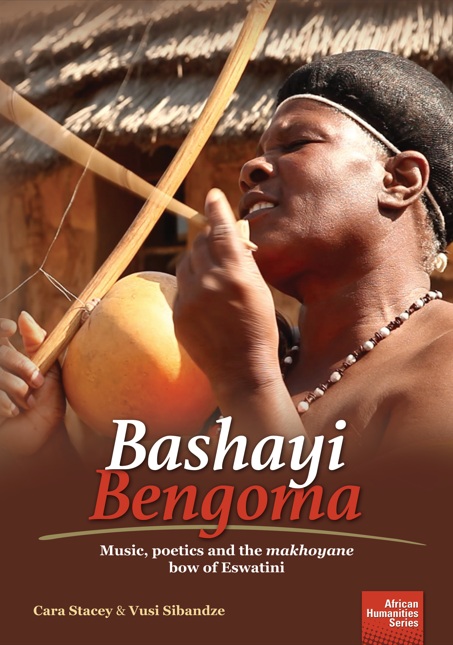
About the book
Recent years have seen a revival of interest in musical bows in Brazil, around the Indian Ocean, and across the African continent. “Bashayi Bengoma - Music, poetics and the makhoyane bow of Eswatini” is the latest contribution to an emerging field of scholarship on musical bows and overtone instruments from southern Africa and beyond. It addresses the lack of literature on the makhoyane bow of Eswatini and a dearth of scholarly research on music from this small southern African country.
In “Bashayi Bengoma”, the authors argue that musical bows are tools that support systems of creative knowledge and expression in southern Africa. The elderly musicians who play traditional instruments in this region have often been mischaracterised as static practitioners, frozen in time. Drawing on extensive work with Swati bow players, the authors reframe these musicians as contemporary artists with unique and dynamic practices, despite their advanced age, rural locations, and traditional lifestyles. While the book includes technical details of music and sound, these are grounded in narratives drawn from practitioners' lives and their poetic lyrics. The research findings complicate common dualities about music, politics and identity.
“Bashayi Bengoma - Music, poetics and the makhoyane bow of Eswatini” is important to music students and scholars, as well as to a general readership interested in African history and politics, rural creativity, urbanisation, languages, musical composition and performance.
Reviewer’s Comments
An old-fashioned organological study might not have ventured much beyond the instrument, its social uses and repertoire, but Stacey and Sibandze weave additional layers of context into their account, including the related politics of identity construction in the new nation state (Eswatini) and the histories of reception.
Professor V Kofi Agawu, City University of New York, USA
Part of the African Humanities Series